


Taylor's University · Taylor's Culinary Institute
Adjunct Professor
James Won
Faculty of Social Sciences and Leisure Management
Lakeside Campus, Subang Jaya

“At TCI, what a kitchen teaches counts. Five years after I first walked into the classroom, the institute has made that a professorship.”
James Won
What the professorship asks of me
Five areas of work, held to the standard the institute asks of its own faculty. Taylor's University's Hospitality and Leisure Management discipline is among the world's top thirty in the QS World University Rankings by Subject 2026.
Teaching
Lectures in kitchen theory and practical work on the undergraduate culinary programmes.
Curriculum
Contributing to course and curriculum planning and development, and to the assessment of students.
Short courses
Developing and leading short courses, public seminars and lectures.
Service
Taking part in the projects and service that carry the institute's standing beyond the campus.
Industry
Connecting the school to the houses, the profession and the wider community of practice.
The professorship at work
On 11 June 2026 I gave the keynote, The Durian: An Embodiment of Power, at Taylor's Lakeside Campus, for the Embassy of France in Malaysia. That evening I cooked the dinner that closed the day at the Residence of France, for His Excellency Marc Abensour, with one sous chef and four final-year students from the institute. We prepared it in TCI's kitchens and finished it at the Residence. Read the evening.
Wherever I speak or publish now, I am introduced as Adjunct Professor at Taylor's Culinary Institute. The title lends my work the weight of the institute, and I carry it with that in mind.


What I bring
For twelve years I have worked inside some of the great luxury houses. I am Krug Ambassade Chef and Gaggenau's Culinary Partner and Ambassador, I was the first ambassador in Malaysia for The Plan and for Mepra, and I have done long-form work with Hennessy, The Macallan, Mortlach and BMW. Those houses taught me how a house is built: how an identity takes shape, how meaning sits in small details, and how a maison earns the standing the public gives it. Cookery schools rarely teach that, and it is the gap I teach into.
The professorship covers culinary sustainability and restaurant entrepreneurship. The sustainability teaching comes from the indigenous gastronomy and conservation work I lead through Serumpun Sarawak. The entrepreneurship teaching comes from fourteen years and six restaurant concepts in Malaysia (Brasserie Enfin, Enfin by James Won, Bouchon Enfin, Shin'Labo, MeatMore and BadBoyCooks), and from the Be Kind pivot during the pandemic. I teach the closures as openly as the openings. A restaurant that closed has as much to teach as one that lasted.
How I teach
In three ways, and each does something the other two cannot.
-
Photograph by the James Won PR team.
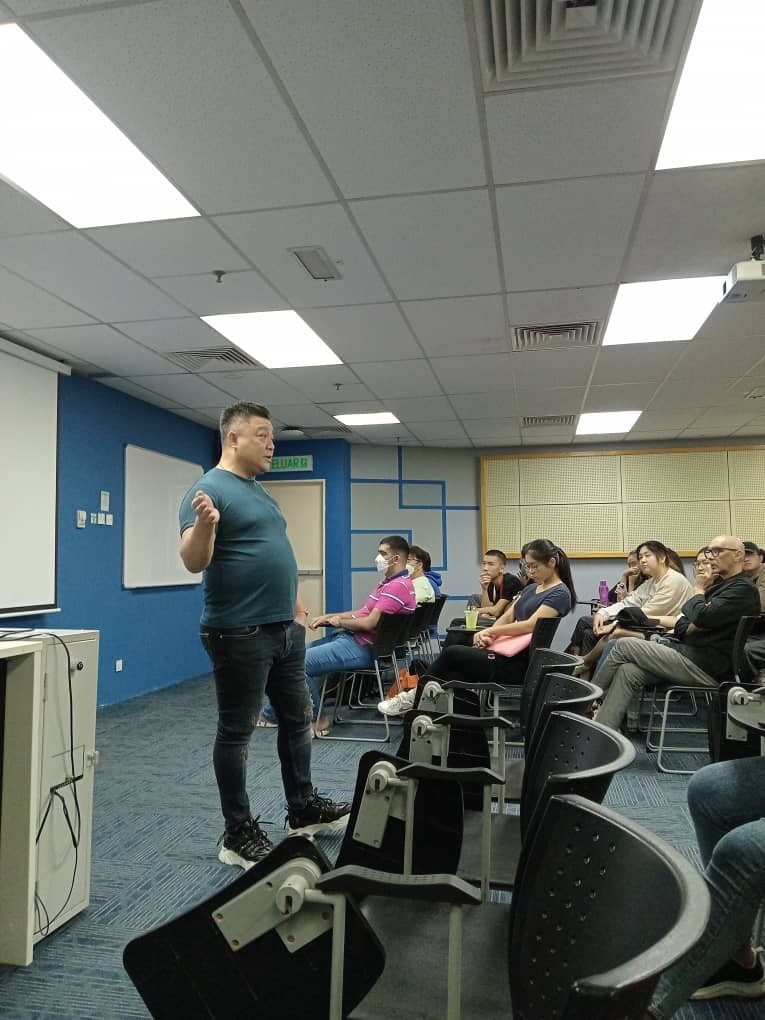
The lectureWhy are you in this kitchen?
The lecture is where I meet a cohort for the first time, and I use it to ask the one question technique cannot answer. This generation finds passion harder to summon than mine did, so I don't give a pep talk. We talk frankly about practice and discipline, and about what cooking asks of a person who wants to do it properly for a lifetime.
-
Photograph by the James Won PR team.
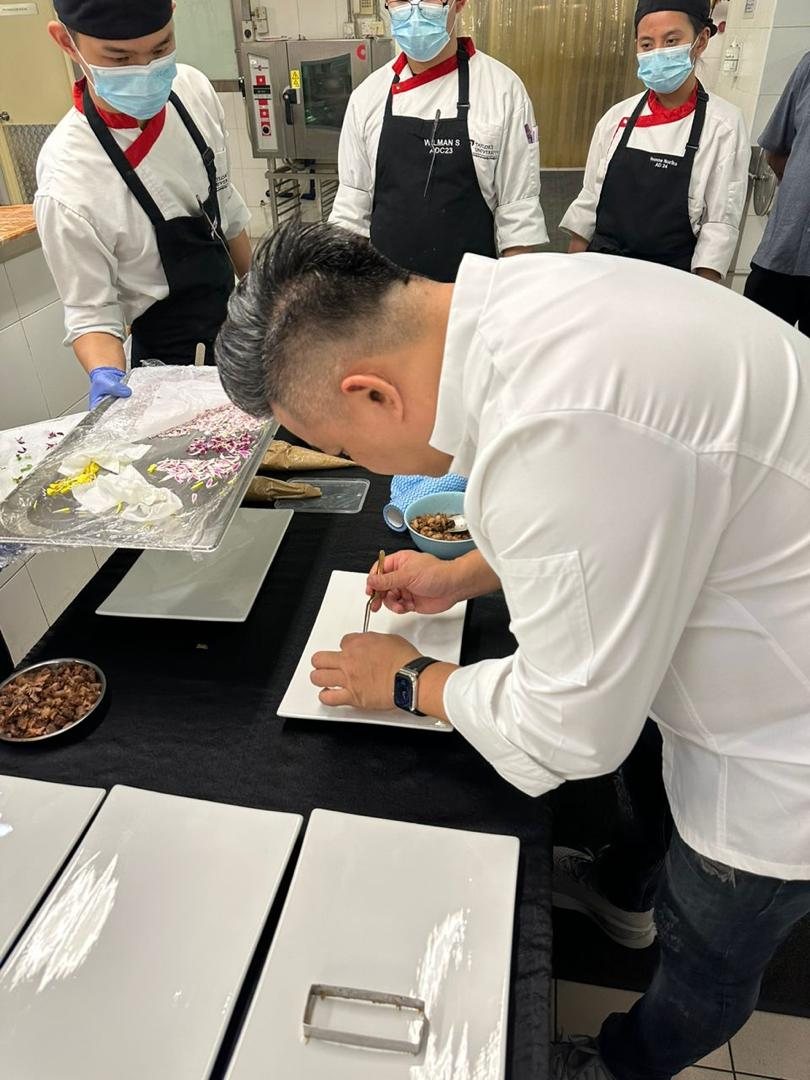
The workshopSide by side
We cook together, on techniques the curriculum names but rarely lets a student feel under an experienced hand. Practice is the mother of all skills, but practice with nobody watching turns into bad habit. So I correct, I demonstrate, and I let them fail while someone is there to see it.
-
Photograph by the James Won PR team.
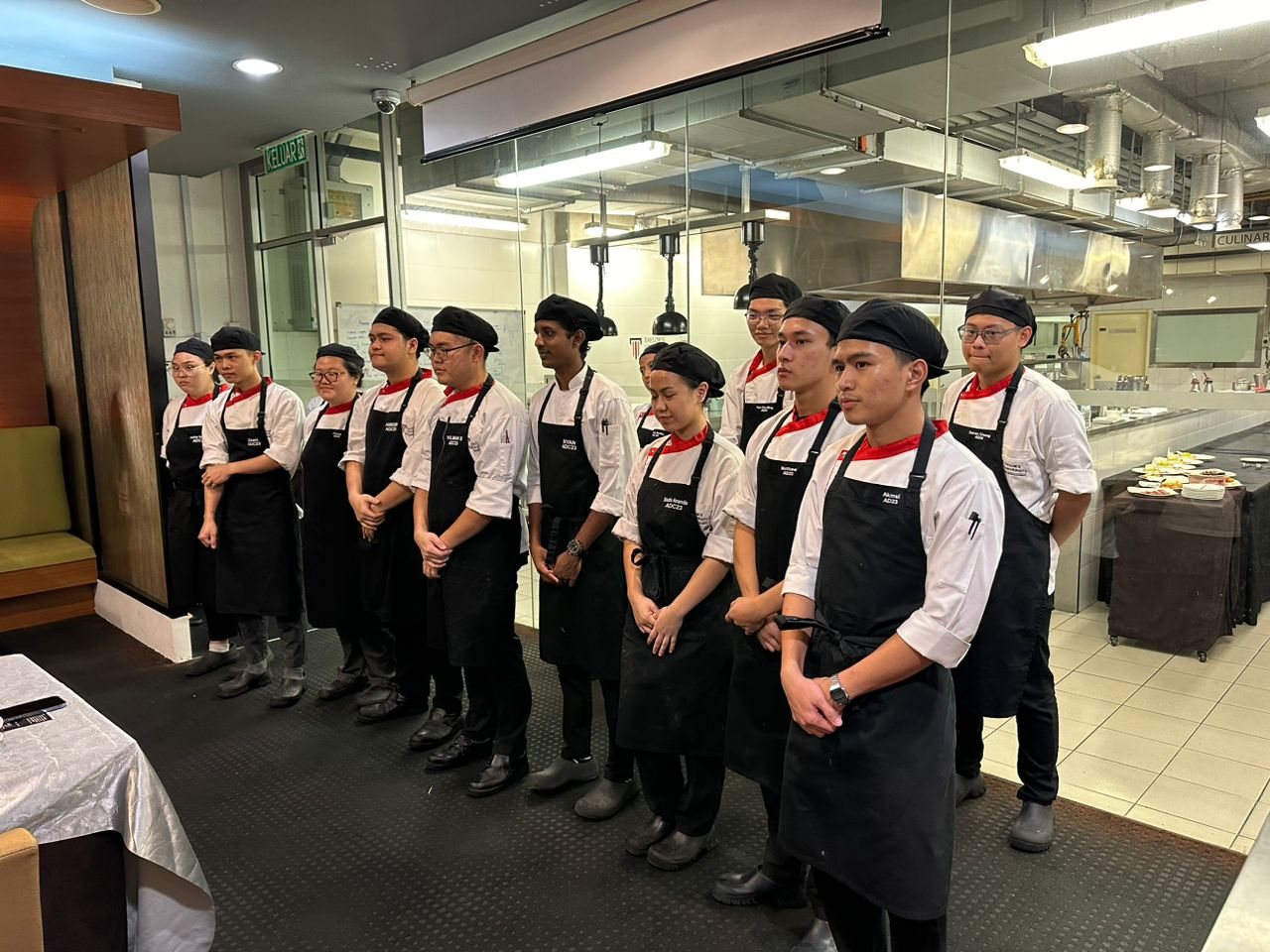
The Master Class at TrufflesThe room is theirs
Students work in the institute's kitchens, I mentor them on menu design and plating, and then they cook a collaboration dinner for real guests. I set the menu's theme and balance; the ideas and the cooking are theirs. They cook, they serve and they face the room, and I stand behind them.


The dinner
On 9 December 2023 Truffles Restaurant hosted the Chef James Won Collaboration Dinner. I invited the guests and TCI hosted the evening. Her Royal Highness Tuanku Sultanah Hajjah Kalsom of Pahang and His Excellency Axel Cruau, Ambassador of France to Malaysia, were at the table. The students cooked the courses under guidance, and I spoke to the room.
I paired the wines and champagnes, and set the room with what the maisons had taught me: which whiteware suits each dish, and which order of courses reads as one line of thought. Classical service has a structure, the order of courses, the pace, and who is served first when royalty or state guests are present. You respect that structure before you change it, and the students saw it kept where it had to be kept and set aside where that served the table better.
Most of it is detail. Each bite is sized for the mouth. Proteins are deboned wherever a state guest should not meet a bone. Sauces are rested until they hold on the spoon. TCI called the evening "an invaluable learning experience", and the students used the same words.

“Engaging, interactive, and intelligent.”
TCI student-life feature
“A dive into the minutiae.”
TCI student-life feature
“An invaluable learning experience.”
TCI, on the December 2023 dinner
What comes back
I get more back from TCI than I bring. Yuda Bustara, an alumnus, has taken his training on to a public profile of his own. The institute's mentoring has been credited as a key driver for students who go on to win gold at WorldSkills and similar international competitions. That record belongs to the institute, and my professorship is one part of it.
In late 2024, when the French government made me Chevalier de l'Ordre du Mérite Agricole, TCI marked it with an official statement, "Honouring Gastronomic Greatness: A Culinary Maestro Chef James Won Receives the Prestigious Ordre du Mérite Agricole." The Embassy of France in Malaysia, in its 2024 award announcement, named the teaching directly: "gives back and passes on to younger generations, as he does at Taylor University."
Questions answered
What is James Won's title at Taylor's?
Adjunct Professor at Taylor's Culinary Institute, part of Taylor's University, within the Faculty of Social Sciences and Leisure Management. He has taught at the institute since 2021.
What does he teach there?
Culinary sustainability and restaurant entrepreneurship, with short courses, public seminars and community service around them. The sustainability teaching comes from the indigenous gastronomy and conservation work of Serumpun Sarawak. The entrepreneurship teaching comes from fourteen years and six restaurant concepts in Malaysia, the closures as openly as the openings.
How is the teaching structured?
In three ways: the lecture, the workshop, and the Master Class series at Truffles Restaurant, TCI's working kitchen and dining room, where students cook a collaboration dinner for real guests.
How can an institution get in touch?
Write to connect@chefjameswon.com and tell me what you are building.
Selected Press
- Taylor's Culinary Institute Honouring Gastronomic Greatness — A Culinary Maestro Receives the Prestigious Ordre du Mérite Agricole TCI's official statement on the French government honour 1 December 2024
- Embassy of France in Malaysia 2024 Award Announcement — gives back and passes on to younger generations, as he does at Taylor University The French Embassy citation that names the TCI teaching 1 September 2024
- Taylor's Culinary Institute Chef James Won Collaboration Dinner — Truffles Restaurant Hosted HRH Tuanku Sultanah Hajjah Kalsom of Pahang and HE Axel Cruau, Ambassador of France 9 December 2023
- Tatler Malaysia An Exclusive Dinner Experience — Taylor's University and TCI Tatler Food coverage of the December 2023 Collaboration Dinner at Truffles 15 December 2023
The classroom is a kitchen with more questions in it.