

A single malt at the first table
The earliest Highland single malt evening I can date: Glenmorangie at Brasserie Enfin, August 2014.
One summer night in August 2014 I cooked a four-course degustation at Brasserie Enfin to go with three Glenmorangie expressions. Esquire Malaysia wrote it up as Whisky for Dinner. The maison's own line at the time, "the purveyor of all things 'unnecessary well made'", described how I already wanted to cook. It was one of the first pairings of the Brasserie Enfin years.
Glenmorangie is a Highland single malt from the distillery at Tain in Ross-shire, founded in 1843. It is light and fragrant, with a complexity that comes from what the distillery calls the tallest copper stills in Scotland. They stand just over five metres high, and give the spirit room to refine itself before it reaches a cask.
Highland and Speyside are very different whiskies. The sherry-cask Speyside style of The Macallan and the 2.81-times-distilled Speyside style of Mortlach both speak in a heavier voice than Glenmorangie. A Highland malt needs a plate that respects its lightness. Whisky for Dinner was cooked for that.
The maison’s phrase, “unnecessary well made”, matters here. It means going past what is strictly needed, into the part that makes the work worth doing. I cooked to that idea, course by course.
This was one of my first whisky partnerships. Most chefs avoid pairing food with high-strength spirits, because the alcohol overwhelms the plate, the plate goes flat against the spirit, and the guest gets the best of neither. Asian ingredients opened another way in. The deeper aromatics from my Malaysian and Borneo cooking, such as torch ginger, sambal heat, ferments and sharp pickles, stood up to the depth of a Highland malt. Course by course I learned to train the senses, and the palate, to taste whisky and food together. I called it Yoga of the Senses.
Luxurious Magazine covered the evening for readers abroad and put it plainly in its headline: Glenmorangie Hosts The “Perfect Pairing” For A Celebration Of All Things “Unnecessarily Well Made”. The maison’s habit of going past what is needed met my own habit of training the palate to notice what it would otherwise miss. “Unnecessarily well made” turned out to describe both of us.
Esquire Malaysia published the piece on 4 August 2014 in its Living section. There were four courses and three Glenmorangie expressions, and the glass and the plate talked to each other all evening. Each expression was the focus of the course it came with. None of them was there for decoration.
- iGlenmorangie The Originalthe ten-year-old, the maison's signature
- Canadian oyster, lemon and ginger gelée.
- iiGlenmorangie The Originalthe same pour, a second course
- Hokkaido scallop, Scottish salmon pearl, fennel and almond crème.
- iiiGlenmorangie 18 Years Oldthe aged Highland expression
- Charcoal-grilled duck leg, Enfin's honey and citrus reduction, fondant roots.
- ivGlenmorangie Signetchocolate malt barley, the most layered of the range
- Fire-roasted pineapple mille-feuille, handmade dark chocolate truffle.
It was a private dining menu, offered on request for at least ten guests at Brasserie Enfin. Esquire summed it up in a phrase I still remember: “Glenmorangie has a suggestion for you.” Together, the maison and I were offering something that was still rare in Kuala Lumpur: a Highland single malt at the centre of a four-course bistro dinner at Oasis Square, in August 2014.

Photograph: Brasserie Enfin archive.
The four courses, photographed through the evening. Scroll through them.
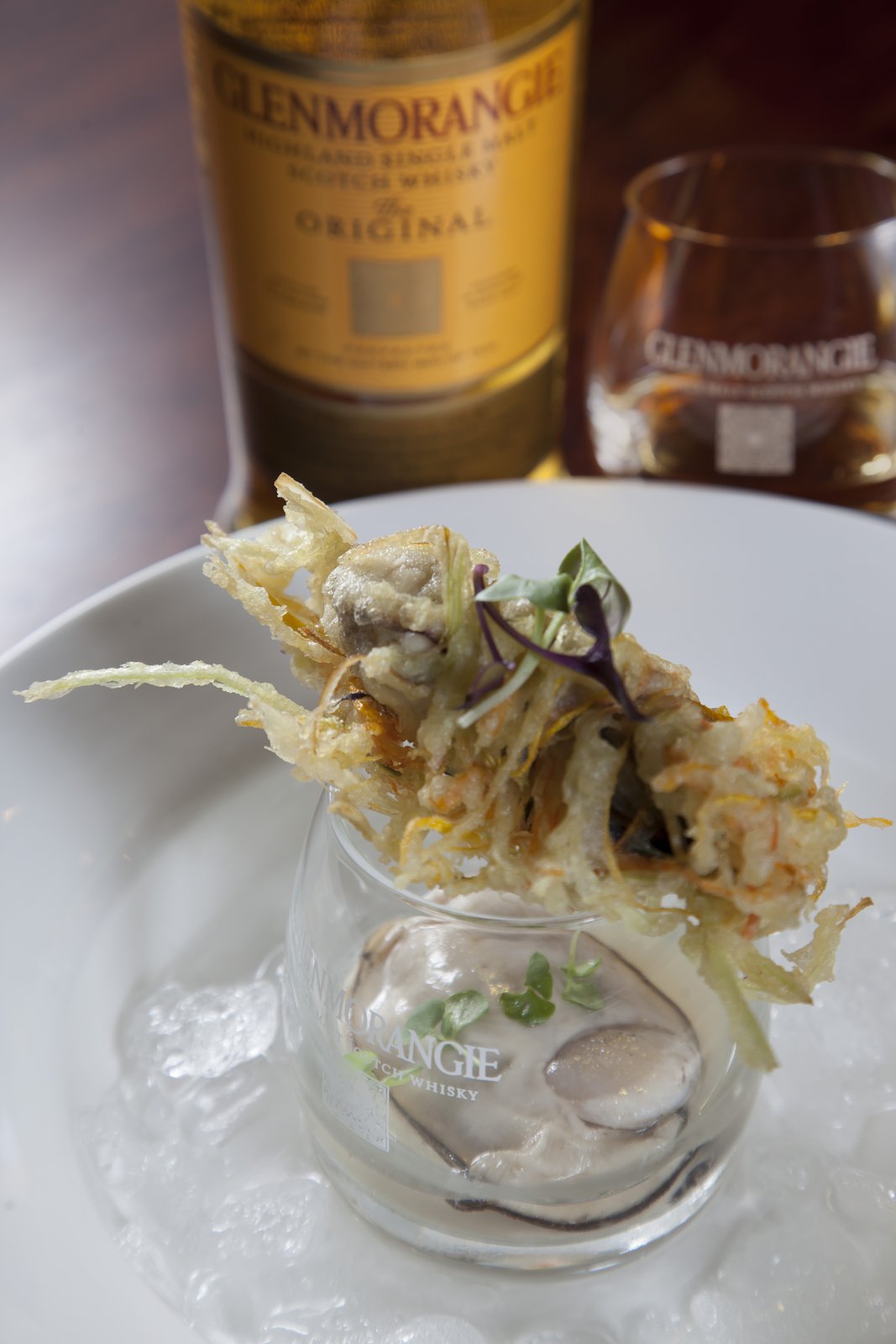
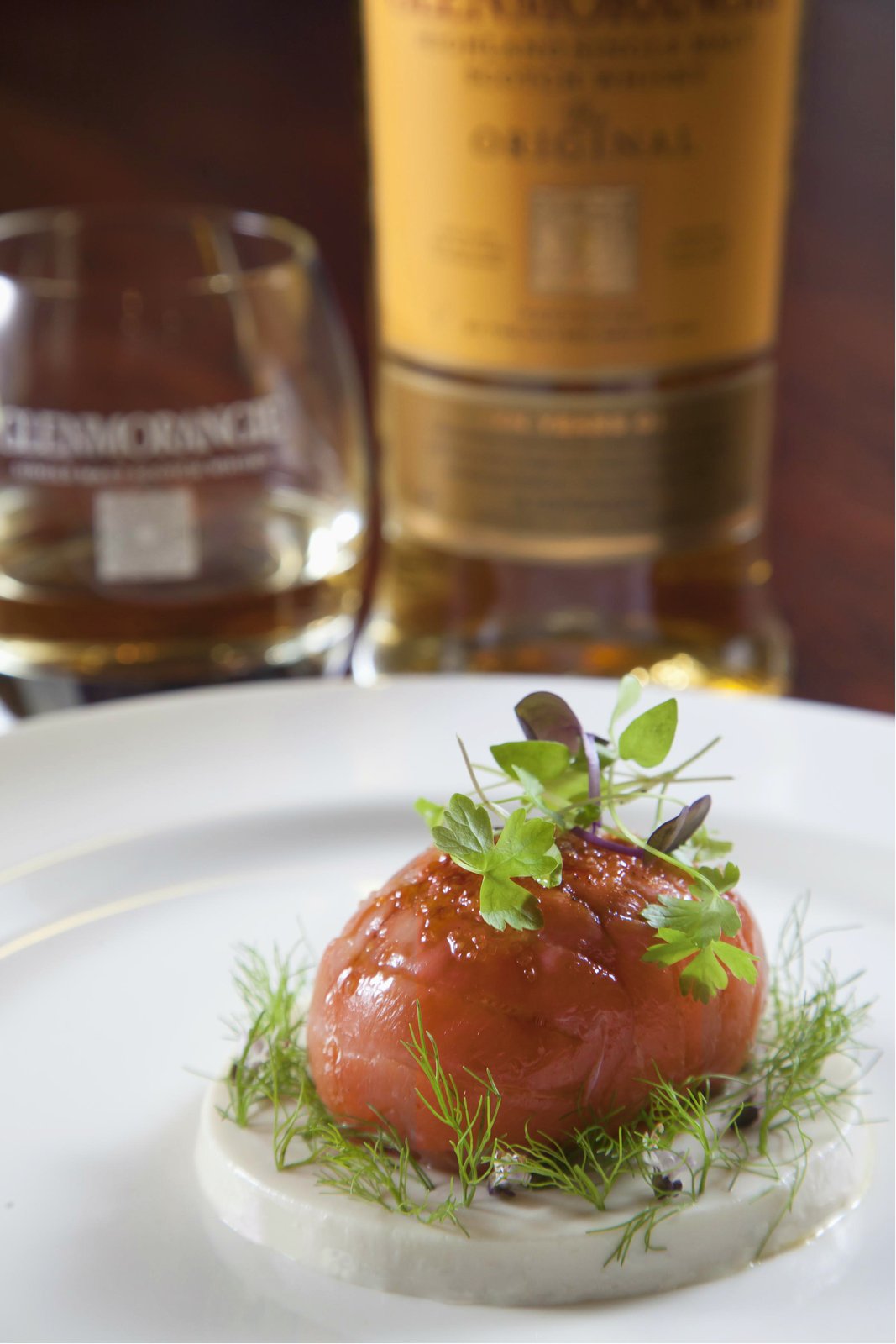
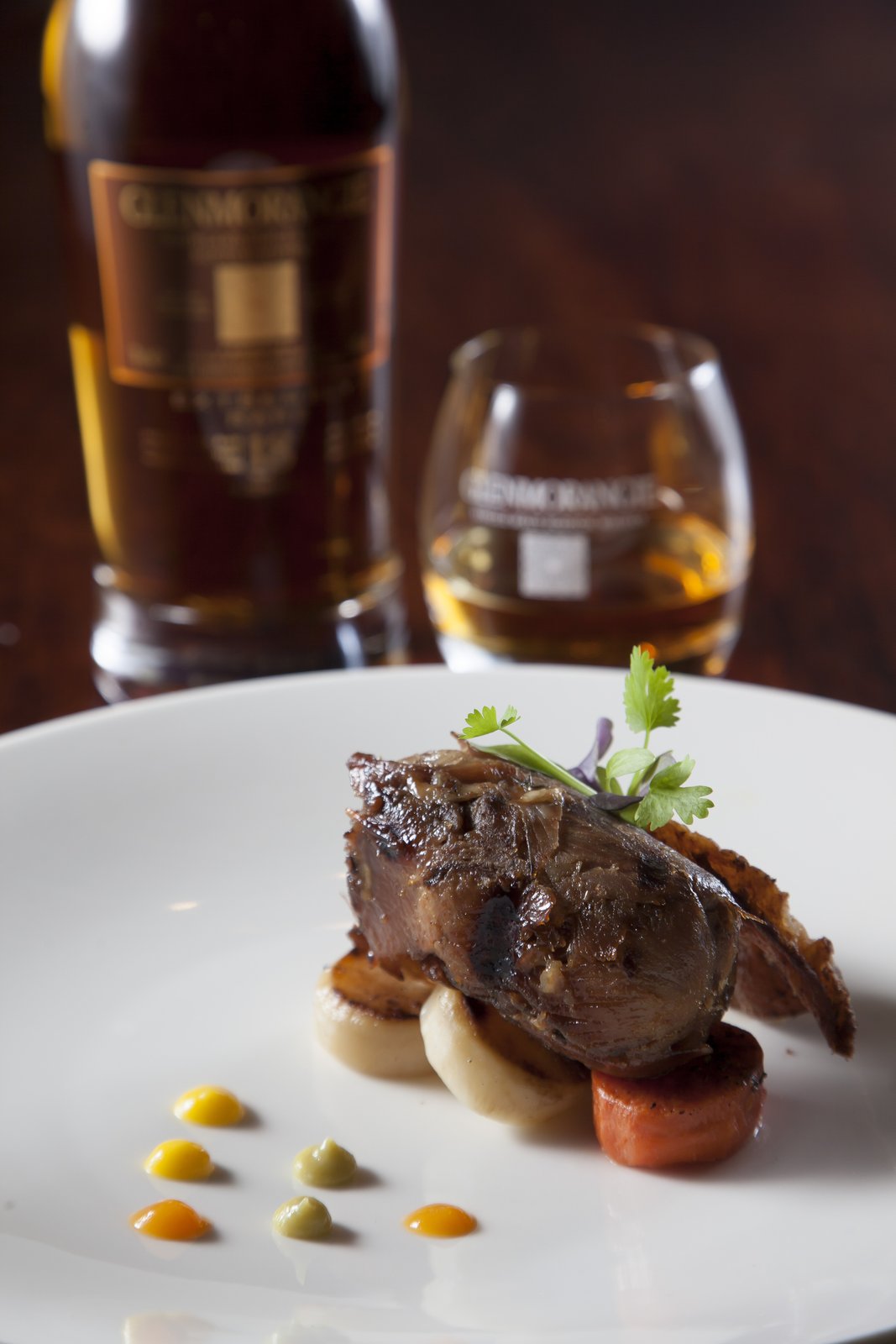
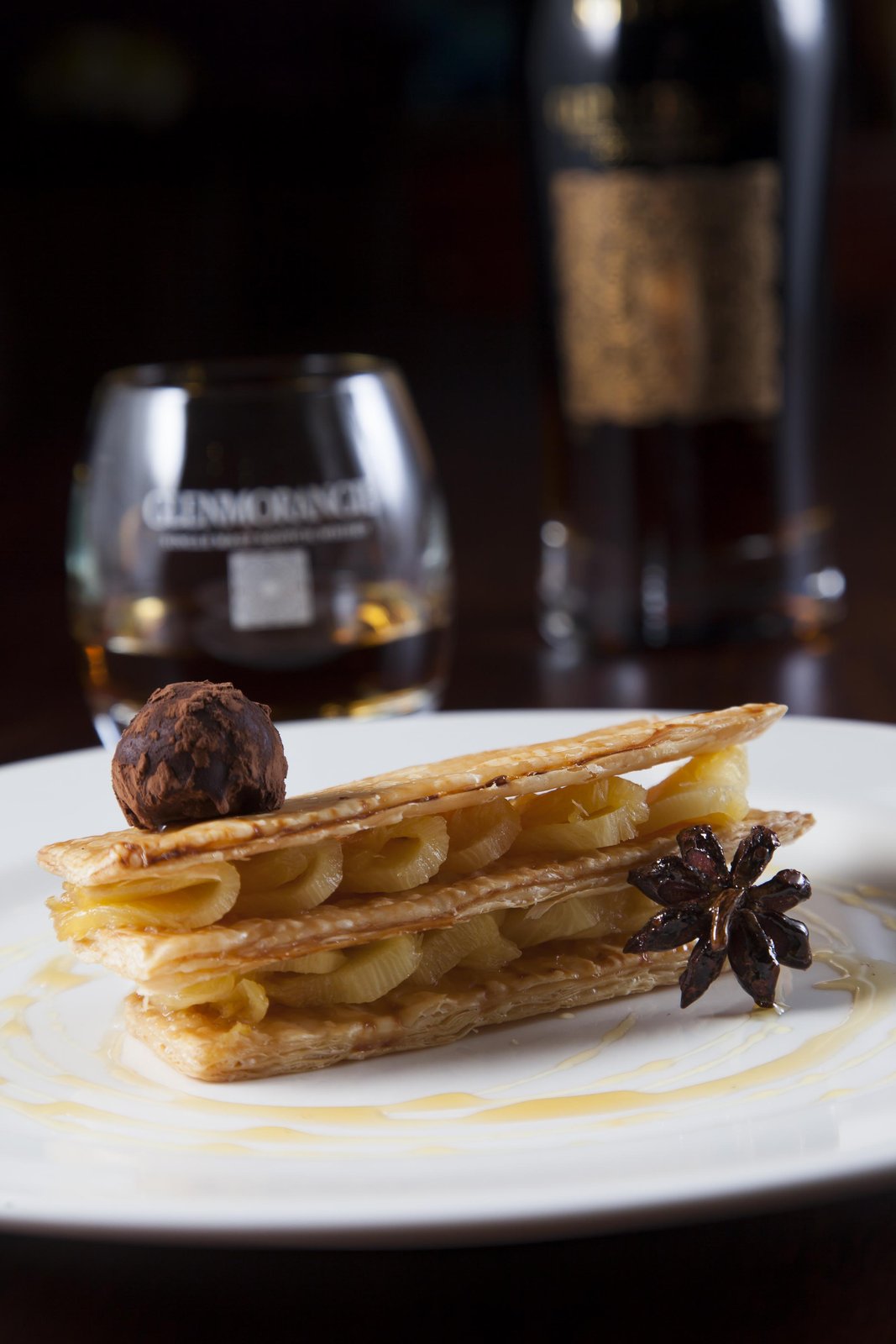
Glenmorangie was one of several things happening at once. My Krug Ambassade work had begun two months earlier, and the Hennessy Appreciation Grows programme would follow two months later, from 30 September to 4 October 2014. The cooking that later grew into the Krug Chef’s Table at Menara Hap Seng and the Hennessy Salon at Enfin was already being worked out, course by course, in a bistro on the western edge of Petaling Jaya, in August 2014.
Glenmorangie was the first time that work was written about.
Whisky for Dinner happened at Brasserie Enfin, but Glenmorangie stayed on the table in the rooms that came after. At Enfin in Menara Hap Seng, and later at Shin’Labo, it came back in our cocktail menus, in serves like the Highland Sazerac, made with Hennessy X.O and absinthe. A house whisky and a sister maison’s cognac in one glass: the MHD family made that kind of serve easy.
Tatler Asia’s later coverage of Enfin recorded these cocktail menus. The maison stayed at the table while the format changed.
Glenmorangie belongs to the Moët Hennessy / LVMH portfolio. In Malaysia the joint venture Moët Hennessy Diageo Malaysia (MHD) distributes it with its sister houses, and the same MHD team has worked with me on it over the years.
That matters to me. The Glenmorangie evening in 2014 was part of a long relationship with the same people, the one that has kept my spirits and champagne work together ever since.
Glenmorangie has a suggestion for you.
Esquire Malaysia (Online) · Whisky for Dinner · 4 August 2014
Selected Press
Full archive →- Esquire Malaysia (Online) Whisky for Dinner Living section · primary-source record 4 August 2014
- Luxurious Magazine Glenmorangie Hosts The Perfect Pairing For A Celebration Of All Things Unnecessarily Well Made International coverage of the Perfect Pairing evening 15 August 2014
Read next
Spirits, champagne and cognac
KrugThe champagne work, with the same Malaysian distributor
HennessyThe cognac work, with the same Malaysian distributor
MortlachA Speyside neighbour with a very different temper
The MacallanThe other Speyside, led by the sherry cask
Louis XIIIThe Rémy Cointreau cognac
Brasserie EnfinThe bistro at Oasis Square where the evening took place
Glenmorangie was the first whisky I cooked for, and the first step in my single malt work. The bistro at Oasis Square set the standard, and the rooms that came after kept to it.